जब कोई व्यक्ति Google पर कुछ खोजता है, तो वह कुछ words या phrases type करता है। इन्हीं words या phrases को सामान्य रूप से Keywords या Search Terms कहा जाता है।
उदाहरण के लिए, अगर कोई Student Google पर “Digital Marketing Course for Beginners” search करता है, तो यह एक search phrase है जिसे SEO strategy में keyword/topic के रूप में target किया जा सकता है।
लेकिन modern SEO केवल keyword को बार-बार लिखने का नाम नहीं है। Search Intent, Relevance, Helpful Content, User Experience, Topic Coverage और Natural Language भी बहुत important हैं।
1. Keyword क्या है?
Keyword वह word या phrase है जिसे User किसी search engine में information, product, service या answer खोजने के लिए type करता है।
- SEO Course
- Digital Marketing Course
- Google Ads Course
- Website Development
- YouTube SEO
- Best SEO Agency
- How to learn Digital Marketing
| Simple Example User search: “Digital Marketing Course for Beginners” → SEO/content strategy में यह एक important search phrase है। |
2. Keyword और Search Query में क्या Difference है?
Keyword
Keyword वह term है जिसे marketer या content creator SEO research और content planning में target/organize कर सकता है।
Search Query
Search Query वह actual phrase है जो User search engine में type करता है।
| Example Target topic: Digital Marketing Course User searches: digital marketing course for beginners, best digital marketing course, digital marketing training, digital marketing course near me. |
3. Keyword Intent क्या है?
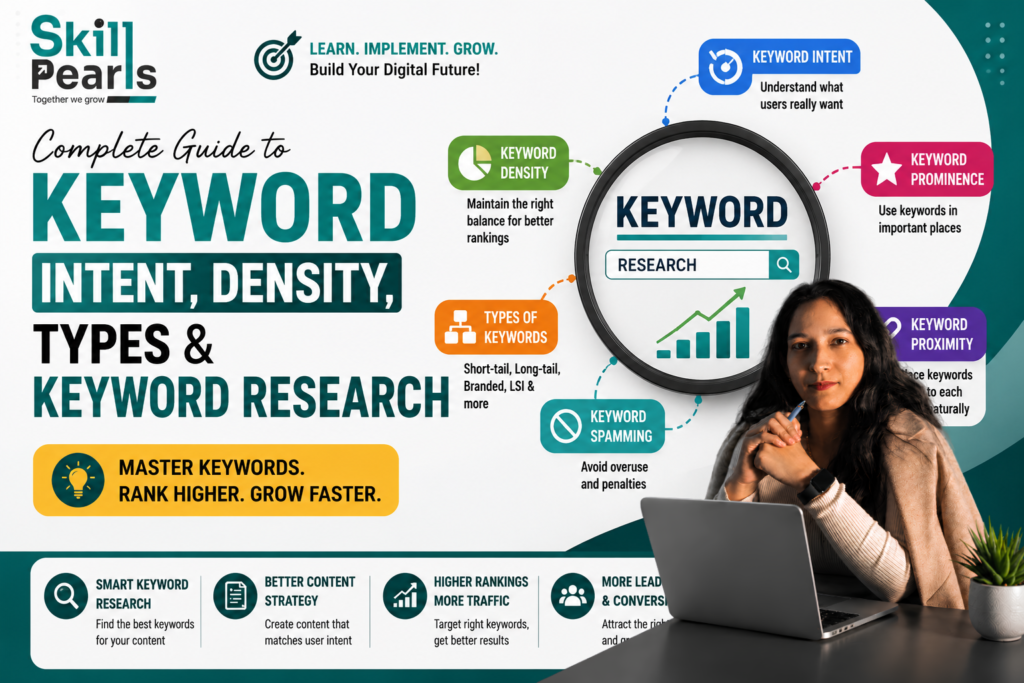
Keyword Intent का मतलब है कि User किसी query को search करके क्या हासिल करना चाहता है। SEO में intent समझना बहुत important है क्योंकि अलग queries के लिए अलग तरह का content चाहिए।
4. Keyword Intent के Main Types
| Intent | User का Goal | Example |
| Informational | Learn / Understand | What is SEO? |
| Navigational | Specific destination ढूँढना | Facebook login |
| Commercial | Compare / Evaluate | Best SEO tools |
| Transactional | Action / Buy / Hire | Hire SEO agency |
5. Keyword Frequency क्या है?
Keyword Frequency का मतलब है कि किसी particular keyword या phrase का content में कितनी बार appearance हुआ।
| Example 1,000-word article में “Digital Marketing” 20 बार आता है → उस keyword की frequency 20 occurrences है। |
ज्यादा frequency का मतलब automatically बेहतर SEO नहीं है। Unnecessary repetition content को unnatural बना सकती है।
6. Keyword Density क्या है?
Keyword Density बताती है कि पूरे content की तुलना में किसी keyword का कितने percentage में उपयोग हुआ।
| Formula Keyword Density = (Keyword Occurrences ÷ Total Words) × 100 Example: 1,000 words में keyword 10 बार → 1% density. |
SEO में कोई universal “magic keyword density” percentage नहीं है। केवल density target करने के लिए keyword भरना सही strategy नहीं है।
7. Keyword Prominence क्या है?
Keyword Prominence का अर्थ है कि target topic/term webpage के important areas में कितनी naturally दिखाई देता है।
- SEO Title
- Main Heading (H1)
- Introduction
- Relevant Subheadings
- Main Content
- URL — जहाँ useful हो
| Example Topic: Google Ads → Title: Google Ads for Beginners → H1: Google Ads क्या है? → Introduction में topic का natural introduction. |
8. Keyword Proximity क्या है?
Keyword Proximity का मतलब है कि keyword phrase के individual words एक-दूसरे के कितने करीब हैं।
| Example Close phrase: “Digital Marketing Course for Beginners” More separated wording: “Learn practical Digital skills and Marketing strategies through our professional Course.” |
Proximity useful concept है, लेकिन हर जगह exact-match phrase force करना जरूरी नहीं है। Natural language और clear meaning को priority दें।
9. Keyword Spamming / Keyword Stuffing क्या है?
जब keyword को Search Engine को manipulate करने के लिए unnaturally और excessively repeat किया जाता है, तो इसे commonly Keyword Spamming या Keyword Stuffing कहा जाता है।
| Bad Example Digital Marketing Course हमारा best Digital Marketing Course है। अगर आप Digital Marketing Course चाहते हैं तो हमारा Digital Marketing Course join करें क्योंकि हमारा Digital Marketing Course best Digital Marketing Course है। |
ऐसा content repetitive, unnatural और user के लिए कम useful है।
10. Keyword Spamming से कैसे बचें?
- Natural language में लिखें
- User के actual questions answer करें
- Synonyms और relevant related terms use करें
- Topic के subtopics cover करें
- Keyword को हर sentence में repeat न करें
- Content को Search Engine के बजाय User-first रखें
11. Keywords के Types
11.1 Short-Tail Keywords
Short-tail keywords generally छोटे और broad phrases होते हैं।
- SEO
- Marketing
- Website
- Google Ads
- Digital Marketing
| Pros & Cons Broad audience मिल सकती है, लेकिन competition और ambiguity अधिक हो सकती है। |
11.2 Long-Tail Keywords
Long-tail keywords ज्यादा specific phrases होते हैं।
- Digital Marketing Course for Beginners
- Best SEO Course in Delhi
- How to learn Google Ads for beginners
- Website Development Course with Practical Training
11.3 Branded Keywords
इनमें किसी specific brand का नाम शामिल होता है।
- Brand Name
- Brand Name Digital Marketing
- Brand Name Courses
11.4 Non-Branded Keywords
- Digital Marketing Institute
- SEO Agency
- Google Ads Course
- Website Development Company
11.5 Local / Geo-Targeted Keywords
- Digital Marketing Institute in Delhi
- SEO Agency in Noida
- Website Development Company in Gurgaon
- Digital Marketing Course near me
11.6 Informational Keywords
- What is SEO?
- What is keyword research?
- How Google Ads works?
- How to create a website?
11.7 Commercial Keywords
- Best SEO tools
- Best Digital Marketing Course
- Best Google Ads Agency
- SEO tools comparison
11.8 Transactional Keywords
- Buy SEO Tool
- Hire SEO Expert
- Join Digital Marketing Course
- Book Website Consultation
11.9 Question Keywords
- What is keyword density?
- How does SEO work?
- How to do keyword research?
- What are long-tail keywords?
12. Primary Keyword क्या है?
Primary Keyword आपके webpage का main target topic होता है।
| Example Blog Topic: Google Ads for Beginners → Primary Keyword: Google Ads / Google Ads for Beginners. |
13. Secondary Keywords क्या हैं?
Secondary Keywords main topic से जुड़े supporting terms होते हैं।
| Example Primary: Google Ads Secondary: Google Ads Campaign, Google Ads for Beginners, Search Ads, Google Ads Keywords, Google Ads Strategy, PPC Advertising, Lead Generation. |
14. Related Keywords को कैसे समझें?
SEO में related terms, synonyms, subtopics और relevant concepts को naturally cover करना useful है। इन्हें केवल keyword list की तरह नहीं, बल्कि topic के अलग-अलग aspects के रूप में देखें।
| Example Primary Topic: Google Ads → Related concepts: PPC, Search Ads, Keywords, Search Intent, CPC, CTR, Conversion, Landing Page, Campaign, Ad Copy. |
15. Practical Keyword Research Example
मान लीजिए आपका Business Digital Marketing Training provide करता है। Main topic है: “Digital Marketing Course”.
| Keyword | Intent |
| Digital Marketing | Broad / Informational |
| What is Digital Marketing | Informational |
| Digital Marketing Course | Commercial |
| Best Digital Marketing Course | Commercial |
| Digital Marketing Course for Beginners | Commercial |
| Digital Marketing Course in Delhi | Local / Commercial |
| Join Digital Marketing Course | Transactional |
Keyword चुनते समय केवल search volume न देखें। Relevance, Intent, Competition और Business Value भी consider करें।
16. Search Volume ही सब कुछ क्यों नहीं है?
Beginners अक्सर सोचते हैं कि सबसे ज्यादा search volume वाला keyword ही सबसे अच्छा keyword है। यह हमेशा सही नहीं होता।
| Example Keyword A : “Digital Marketing” → बहुत broad हो सकता है. Keyword B: “Digital Marketing Course for Beginners” → ज्यादा specific है. अगर आपका goal course enquiries है, तो Keyword B का intent आपके business goal के ज्यादा करीब हो सकता है। |
17. Keywords को Content में कहाँ Use करें?
- SEO Title — जहाँ natural हो
- H1 — page topic clearly define करने के लिए
- Introduction — topic को naturally introduce करें
- Relevant H2/H3 headings — केवल जहाँ genuinely relevant हो
- Body Content — natural language में
- URL — concise और descriptive रखें
- Image Alt Text — image को accurately describe करें
18. Keyword Optimization का सही तरीका
| Professional SEO Thinking गलत सवाल: “मैं keyword कितनी बार डालूँ?” सही सवाल: “मैं User की query का सबसे useful answer कैसे दूँ?” |
Better process: Search Query → Intent → Topic → Helpful Content → Related Subtopics → User Experience → Natural Optimization.
19. Keyword Stuffing से कैसे बचें?
| Avoid | Better Approach |
| एक ही keyword हर sentence में | Natural variations और related terms |
| हर heading में exact keyword | जहाँ topic के लिए relevant हो |
| Unnatural sentences | Reader-friendly language |
| Irrelevant keywords | Topically relevant terms |
| केवल search engine के लिए content | People-first useful content |
20. Students के लिए Practical Keyword Exercise
Topic: Facebook Marketing
| Practice Primary Keyword: Facebook Marketing Secondary: Facebook Marketing Strategy, Facebook Page Growth, Facebook Advertising, Facebook Content Strategy, Facebook Engagement Informational: What is Facebook Marketing? Commercial: Best Facebook Marketing Agency Transactional: Hire Facebook Marketing Agency Local: Facebook Marketing Agency in Delhi |
21. Complete Keyword Strategy Framework
- Business Goal समझें — Traffic, Leads, Sales, Awareness या Enrollments
- Audience समझें — Students, Business Owners, Professionals, Freelancers आदि
- Keyword Research करें
- Search Intent Identify करें
- Primary Keyword चुनें
- Secondary Topics और Questions जोड़ें
- Helpful, clear और practical content लिखें
- Natural on-page optimization करें
- Relevant performance metrics monitor करें
- Data के आधार पर content improve करें
22. SEO में Keywords की सही भूमिका
Keywords SEO का important हिस्सा हैं, लेकिन SEO केवल keywords नहीं है। एक strong webpage में relevance, search intent, helpful content, technical SEO, user experience, internal linking, authority और continuous improvement भी important हो सकते हैं।
23. Quick Revision — सभी Concepts एक नज़र में
| Concept | आसान Meaning |
| Keyword | User का search word या phrase |
| Keyword Intent | User क्या हासिल करना चाहता है |
| Keyword Frequency | Keyword कितनी बार आया |
| Keyword Density | Total content की तुलना में keyword का percentage |
| Keyword Prominence | Important page areas में topic की visibility |
| Keyword Proximity | Keyword phrase के words की closeness |
| Keyword Spamming | Unnatural / excessive keyword use |
| Short-Tail | Broad और short phrase |
| Long-Tail | Specific और longer phrase |
| Branded | Brand name वाला keyword |
| Local | Location-focused keyword |
| Informational | Information पाने के लिए |
| Commercial | Compare / evaluate करने के लिए |
| Transactional | Action / purchase के करीब |
| Primary Keyword | Main target topic |
| Secondary Keyword | Supporting related terms |
24. Conclusion
अगर आप SEO सीखना चाहते हैं, तो Keywords आपकी SEO journey की foundation हैं। लेकिन सिर्फ keywords याद करना पर्याप्त नहीं है।
आपको यह समझना होगा कि User क्या search कर रहा है, वह क्यों search कर रहा है, उसे किस तरह का answer चाहिए और आपका content उसकी problem को कितनी अच्छी तरह solve करता है।
यही सोच आपको Beginner से बेहतर SEO Content Creator और Digital Marketer बनने में मदद करती है।
| Final Thought “Write for people first, optimize for search engines naturally.” Keyword भरना SEO नहीं है। सही User को सही information देना बेहतर SEO की शुरुआत है। |
| Student SEO Formula Right Keyword → Right Search Intent → Helpful & Relevant Content → Natural Keyword Usage → Better User Experience → Continuous SEO Optimization |
SEO Publishing Details
| SEO Element | Recommended Version |
| SEO Title | SEO Keywords: Keyword Intent, Density, Types & Research Guide |
| Focus Keyword | SEO Keywords |
| URL Slug | seo-keywords-keyword-intent-density-types |
| Meta Description | SEO Keywords को आसान Hindi में समझें। जानें Keyword Intent, Density, Frequency, Prominence, Proximity, Keyword Spamming, Types of Keywords और practical Keyword Research strategy. |
| Secondary Keywords | keyword intent, keyword density, keyword types, keyword research, keyword prominence, keyword proximity, keyword spamming, long tail keywords, short tail keywords |
Suggested Tags: SEO Keywords, Keyword Research, Keyword Intent, Keyword Density, Keyword Frequency, Keyword Prominence, Keyword Proximity, Keyword Spamming, Types of Keywords, Long Tail Keywords, Short Tail Keywords, SEO for Beginners, SEO Tutorial, Digital Marketing, Content SEO